If you’ve been researching ways to straighten your teeth without a mouthful of metal, you’ve probably noticed that “Invisalign” and “clear aligners” seem to be used interchangeably online. It’s a common source of confusion, and a question we’re asked regularly by patients enquiring about Invisalign in Sutton Coldfield.
The short answer? Invisalign *is* a clear aligner — but not every clear aligner is Invisalign. Think of it a bit like “Hoover” and “vacuum cleaner”: one is a specific, well-known brand, and the other is the general category it belongs to.
In this guide, we’ll unpack what actually separates Invisalign from other clear aligner systems, what the research says about how well they work, what tends to affect cost, and how to figure out which route might suit your smile. If you’re weighing up clear aligners in Sutton Coldfield, this should give you a clearer starting point (pun very much intended).
“Clear aligners” is the umbrella term for any transparent, removable tray used to gradually move teeth into a straighter position. Instead of fixed brackets and wires, you wear a series of custom-made trays, each one nudging your teeth slightly closer to the desired result.
There are now a good number of clear aligner brands on the market — Invisalign being the most recognisable, alongside others such as ClearCorrect and Spark. They all work on broadly the same principle, but the technology, materials and treatment planning behind each one can differ quite a bit.
Invisalign was one of the earliest clear aligner systems and has spent over two decades refining its approach. A few things tend to set it apart from generic or newer aligner brands:
That said, Invisalign isn’t automatically the right fit for everyone, and it isn’t the only clear aligner capable of good results. A 2025 pilot study comparing virtual treatment setups across four different clear aligner companies found meaningful differences between providers in the number of aligners prescribed, the use of attachments, and the planned final bite position for the same patient records — a useful reminder that the *system* you choose and the *clinician* planning your treatment both matter.
It’s a fair question — does it matter which aligner brand you use, as long as your teeth end up straight?
To some extent, yes. A 2025 systematic review looking at the factors influencing Invisalign’s predictability found that treatment success is shaped by several things working together: how closely a patient sticks to wearing their aligners as instructed, the accuracy of the treatment planning, and how complex the case is to begin with. The review also noted that certain tooth movements — such as expanding the dental arch — can be harder to predict precisely, with actual results sometimes falling short of what the software forecasts.
This isn’t a reason to worry. It simply means that regular check-ins with your dentist during treatment are genuinely useful, not just a formality — they allow any adjustments to be made along the way, keeping your treatment on track.
“Patients often assume the aligner brand does all the work, but planning and monitoring make just as much difference to the final result. We review progress at each stage, so if a tooth isn’t tracking quite as expected, we can address it early rather than waiting until the end of treatment.” — Dental Team, Birmingham Dental Excellence
One detail patients rarely think to ask about is aligner thickness — but it turns out to matter more than you’d expect. A 2025 clinical trial comparing thinner (0.5mm) and thicker (0.75mm) aligners found that the thinner trays were more comfortable to wear, while the thicker ones produced somewhat more efficient tooth movement. In other words, there’s a genuine trade-off between comfort and speed, and different systems strike that balance differently.
This is one of the reasons a proper consultation matters so much. What works well for one person’s bite and lifestyle may not suit someone else in quite the same way.
| Invisalign | Generic/Other Clear Aligners | |
|---|---|---|
| Material | SmartTrack multi-layer plastic | Varies by manufacturer |
| Treatment planning | Detailed 3D digital simulation | Varies — some offer this, others don’t |
| Suitability for complex cases | Broader range, including attachments | Often more limited |
| Clinical track record | Extensive, long-established | Newer systems may have less long-term data |
| Cost | Generally higher | Often lower, but quality varies |
The right choice really comes down to your specific bite, your budget and how much complexity your case involves — which is exactly what a consultation is for.
Aligner treatment isn’t a fixed price, because it scales with the complexity of your case: how much movement is needed, how many aligners that requires, and whether attachments or refinements are involved. A minor adjustment to a few front teeth is a very different plan to a comprehensive correction.
At Birmingham Dental Excellence, you’ll receive a clear cost breakdown after your assessment, so you can compare your options — Invisalign or an alternative — with realistic figures rather than an online estimate.
Clear aligners tend to suit patients with:
More complex misalignments may still be treatable with aligners, but might need a longer course of treatment, additional attachments, or in some cases a different approach altogether. This is something your dentist can assess properly at a consultation, rather than something to self-diagnose from photos online.
There’s no single “right” clear aligner for every patient — it depends on what your teeth need and what you’re hoping to achieve. What research consistently points to is that outcomes depend heavily on accurate planning, realistic case selection and consistent monitoring throughout treatment, regardless of which brand is used.
At Birmingham Dental Excellence, we talk you through the options honestly, including whether Invisalign or an alternative aligner system suits your particular case, so you can make a decision with confidence rather than guesswork.
Is Invisalign the same as clear aligners?
Invisalign is a brand of clear aligners. All clear aligners work on the same principle of gradual, removable trays, but they differ in materials, planning technology and track record.
Is Invisalign better than other clear aligners?
It has an extensive clinical track record and broad case suitability, but “better” depends on your case. Accurate planning and the clinician guiding treatment matter as much as the brand.
How much does Invisalign cost in Sutton Coldfield?
Cost depends on how much tooth movement is needed and how complex your case is. You’ll get a clear breakdown after an assessment at Birmingham Dental Excellence.
How long does clear aligner treatment take?
It varies with case complexity. Milder cases can be quicker, while more involved corrections take longer. Consistent wear of 20–22 hours a day keeps treatment on schedule.
Do clear aligners really work?
For suitable cases and with good wear compliance, yes. Research shows outcomes rely heavily on planning accuracy, case selection and consistent monitoring.
Back to Blog

Our state-of-the-art practice is dedicated to providing exceptional dental treatments in a comfortable and welcoming environment where we believe that a beautiful smile can change your life.
Our treatments

The number one solution for broken smiles.


Enjoy the advances of modern cosmetic dentistry with us.


Satisfaction and positive confidence with Invisalign®.


Subtle treatments to enhance your appearance.
The number one solution for broken smiles.
Enjoy the advances of modern cosmetic dentistry with us.
Satisfaction and positive confidence with Invisalign®.
Subtle treatments to enhance your appearance.

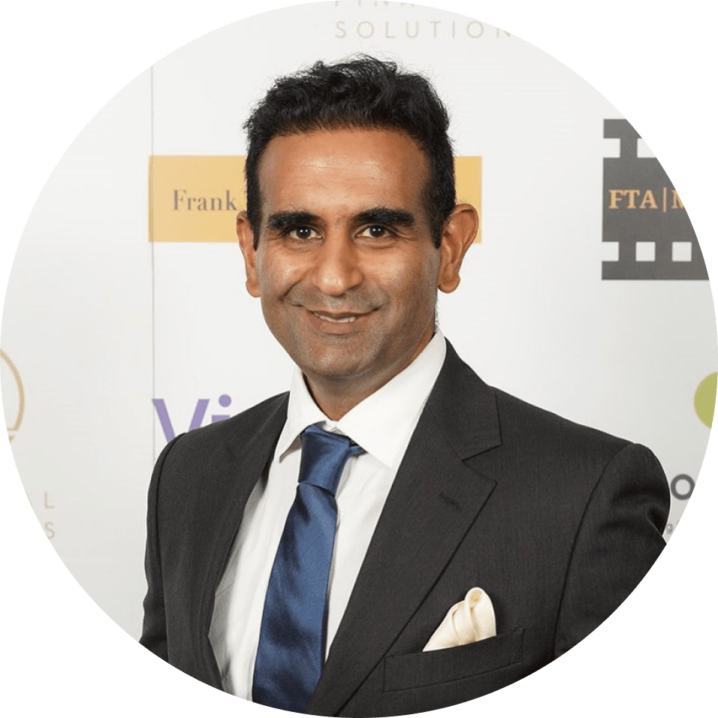
Veerinder is a skilled dentist who graduated from The University of Birmingham in 2007. After completing his studies, he spent a year working in South London, gaining valuable knowledge in treating both NHS and private patients.
Read More


“I recently completed a single dental implant procedure with Dr Nazran and was very impressed with his skill and professionalism. I get very nervous during medical procedures, and Dr Nazran was very gentle and took his time to make me...”
“Nothing but praise for the dentist who does implants at this practice and his staff! He explains everything he's doing in a very calm and reassuring manner. I am very pleased with the outcome and would recommend him to anyone....”
“Fantastic work by Dr Nazran. He has given me loads of information about keeping my teeth good and healthy after a clean and check-up for bleeding gums. My teeth feel fantastic after 6years of not going to the dentist. Best...”
“Thank you to the team for making my visit to you this morning more comfortable than I could have expected. You are all very good at making patients feel more relaxed and at ease. I appreciate Dr Nazran trying to...”
“Thank you so much for helping me to get the smile I've always wanted. You have been amazing throughout the whole process (as if it's been 3 years!). I honestly couldn't have asked for anyone better to have gotten these...”
“I recently completed a single dental implant procedure with Dr Nazran and was very impressed with his skill and professionalism. I get very...”
“Nothing but praise for the dentist who does implants at this practice and his staff! He explains everything he's doing in a very...”
“Fantastic work by Dr Nazran. He has given me loads of information about keeping my teeth good and healthy after a clean and...”
“Thank you to the team for making my visit to you this morning more comfortable than I could have expected. You are all...”
“Thank you so much for helping me to get the smile I've always wanted. You have been amazing throughout the whole process (as...”